Bello canvasses new approaches to enhance learning
By Abubakar Imam
A former Head of the Department of Science Education, University of Ilorin, Prof. Ganiyu Bello, has called on stakeholders to adopt constructivist methods to deepen understanding and move learning beyond memorisation.
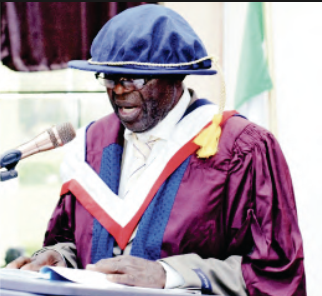
Prof. Bello made this advocacy last Thursday (May 7, 2026) while delivering the 301st Inaugural Lecture of the University, titled “Advancing Biology Education through Constructivist Pedagogy: A Road to Sustainable National Development”, at the University Auditorium.
The inaugural lecturer said that such approaches like concept mapping, analogy, game-based learning, gallery walks, and mind-maps would facilitate proper learning and not memorisation that most pupils are used to.
He explained that strengthening pupils’ problem-solving and critical thinking skills through these methods would equip learners to contribute innovative solutions that advance sustainable national development.
Prof. Bello, who obtained all his degrees from the University of Ilorin, said that Biology teachers, educators, and researchers should also conduct regular diagnostic assessments, workshops, and feedback sessions to address misconceptions.
This, Prof. Bello noted, would improve learning outcomes and strengthen teachers’ instructional accuracy. He said that a scientifically literate population supports sustainable growth by making informed decisions in areas such as health, agriculture, and environmental management.
He also suggested that curriculum developers, textbook publishers, and education ministries should review and update Biology textbooks, diagrams, and resources to ensure accuracy, inclusivity, and alignment with modern scientific knowledge.
The don said that reliable materials would benefit both teachers and pupils, adding that high-quality curricular resources build national capacity in science and technology, which is essential for sustainable economic and social development.
Prof. Bello also said that government agencies, school ICT Departments, and edutech providers should supply simulations, virtual laboratories, e-learning platforms, and multimedia tools.
The Inaugural Lecturer noted that these technologies make Biology interactive, accessible, and relevant as he said that expanding digital literacy would prepare future citizens to participate in a knowledge-based economy, thereby supporting sustainable national progress.
Prof. Bello also called on teacher training institutions, Ministries of Education, and professional associations to organise continuous professional development, seminars, and certification programmes. He said that the initiatives would strengthen teachers mastery of Biology contents and pedagogy.
He noted that teachers who are skilled would produce graduates who can drive innovations in science, technology and environmental sustainability, reinforcing national development goals.
The Inaugural Lecturer added that future research in Biology Education should prioritise strategies for remediating persistent student misconceptions, particularly through the integration of constructivist approaches such as concept mapping, analogy-based teaching, gallery walks, and technology-enhanced tools like demo kits and computer animations.
Equally important, according to Prof. Bello, is the need to strengthen teacher knowledge and professional development by embedding explicit instruction on the Nature of Science (NOS) and epistemological foundations into pre-service and in-service training, while also reforming curricula to better prepare teachers for complex conceptual challenges.
Prof. Bello also posited that further study should be made to address curriculum and textbook reform, focusing on readability, gender representation, and diagram accuracy, alongside the incorporation of inquiry-based process skills to foster critical thinking.
He also said that research into technology integration, including Artificial Intelligence tutoring systems, WebQuest strategies, game-based learning, and mobile learning platforms should also examine infrastructural and institutional factors that enable equitable adoption.
Prof. Bello also advised that future studies should investigate targeted interventions for low-achieving students, the role of self-efficacy in shaping learning and related issues to ensure national progress.
The Inaugural Lecturer, who had taught in a number of secondary schools and the Kwara State College of Education, Ilorin, before joining the University of Ilorin, advised senior academics to provide adequate mentorship for their younger colleagues.
He also encouraged parents and guardians to always support their children and wards, particularly in the pursuit of learning and career progression.
The Vice Chancellor, Prof. Wahab Egbewole, SAN, was represented at the lecture by the Director of Academic Planning, Prof. Abdulrasheed Adeoye.
