Before the car prize, UNILORIN supported my research in many ways-Fahm
By Mubarak Oladosu
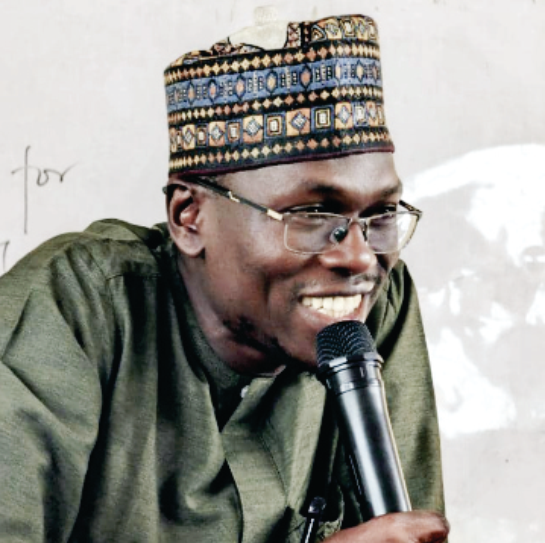
The first academic staff member in the core Humanities to win the Researcher of the Year Award at the University of Ilorin, Dr AbdulGafar Olawale Fahm, has disclosed that the University has a tradition of supporting academic research across board and has supported him over the years in different ways.
Dr Fahm stated this last Wednesday (April 29, 2026) in a telephone chat with UNILORIN Bulletin.
He noted that the University had availed him with series of research training so numerous that he has lost count.
While noting that the University provides an atmosphere that supports research generally, the award-winning don revealed that the University now has several research grants, ranging from the Faculty Research Grant, Senate Research Grant, Special Intervention Research Grant and the National Research Fund, among others.
He also acknowledged senior academics in the Islamic Studies Unit and the Department of Religions at large such as retired Prof. Y. A. Quadri, Prof. Emeritus I. O Oloyede, Prof. Y. O. Imam and Prof. Oyeronke Olademo for mentoring him and giving him the foundation on which mentors in other fields built on.
Dr Fahm, who is an Associate Professor at the Department of Religions and a year 2005 alumnus of the University, noted that interdisciplinary collaboration has given his research tremendous boost.
While speaking on the future of studying Islamic Studies, Dr Fahm noted that the future is bright for students in Islamic Studies and remarked that “the prospects are strong if we train scholars to be bilingual, fluent in the classical tradition and fluent in the questions of their age”.
He further noted that the field of Islamic Studies needs experts who can speak to AI ethics, ecological crisis, and digital life from the Islamic point of view.
According to him, younger scholars in Islamic Studies have more areas to research on, He said, “With digitisation and global networks, they have more reach than any generation before. The key challenge is ensuring depth alongside breadth: grounding in turāth while engaging new methodologies. If we get that right, Islamic Studies won’t just survive, it will lead”.
