
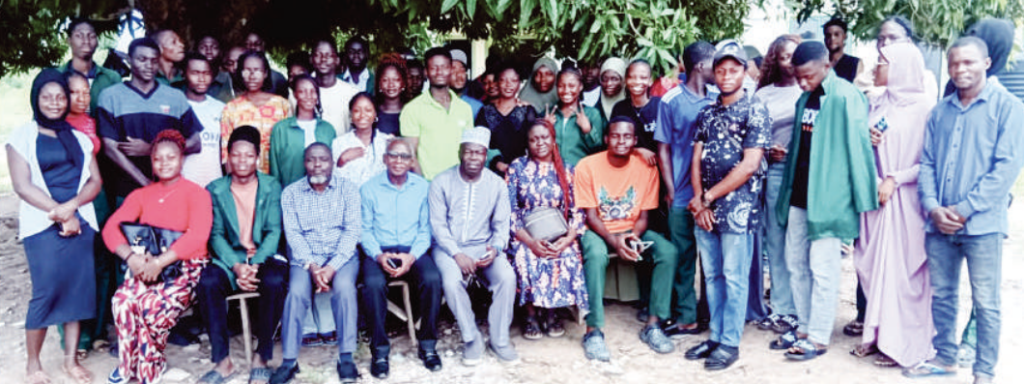
COBES students commend UNILORIN management over field support, community engagement
By Mustafa Abubakar
The400-Level students of the Faculty of Agriculture, University of Ilorin, participating in the Community Based Experience Scheme (COBES), have commended the University management for sustaining practical field learning and community engagement aimed at strengthening their professional development and exposing them to real-life agricultural practices.
The commendation came penultimate Tuesday (June 23, 2026) during a monitoring visit by the Faculty leadership to communities hosting the students for the exercise. No fewer than 403 students are currently participating in the exercise.
The delegation, led by the Dean of the Faculty of Agriculture, Prof. Israel Ogunlade, alongside the COBES Coordinator, Prof. L. L. Adefalu, and Faculty supervisors, visited Amoyo, Ogbondoroko, Reke, Sentu, Ile-Apa and Lajiki communities where the students are undertaking field assignments.
Addressing the students, Prof. Ogunlade, who represented the Vice Chancellor, Prof. Wahab Olasupo Egbewole, SAN, expressed satisfaction with the commitment, discipline and enthusiasm of the students, noting that COBES remains a critical component of agricultural education because it allows students to engage directly with practical agricultural challenges in rural communities.
He said the exposure prepares students to contribute meaningfully to agricultural development and food security, urging them to maximise the opportunity by learning directly from farmers and understanding grassroots agricultural production systems.
The Dean appreciated the cooperation and hospitality extended by host communities, assuring them of the University’s commitment to sustaining community-based learning initiatives.
In his remarks, the COBES Coordinator, Prof. L. L. Adefalu, commended the students for their dedication and positive conduct, noting that reports from the communities indicated that participants had remained focused on the objectives of the programme.
He explained that COBES remains strategic in connecting classroom knowledge with practical realities in farming communities and urged students to properly document observations, research findings and field experiences for academic evaluation.
On their parts, the Field Supervisors expressed satisfaction with the level of work already undertaken by the students.
They observed that students had shown seriousness in carrying out community surveys, practical agricultural assessments and field interactions, while advising them to remain focused and ensure proper documentation of their reports.
Presenting their reports, student team leaders from Reke, Ogbondoroko and Amoyo communities gave accounts of their activities since the commencement of the programme.
Speaking for Reke, Folarin Emmanuel Blessings said members had actively engaged community residents while gathering data relevant to farming activities and community development.
At Ogbondoroko, Oyebamiji Damilola Emmanuel reported that members carried out demographic surveys and community-based assessments while interacting with local farmers on modern agricultural practices.
Similarly, Olukuewu Wahab Eniola, leader of the Amoyo team, said the students undertook practical observations in livestock management and agricultural production systems while identifying agricultural challenges requiring practical solutions.
The student leaders collectively appreciated the University Management for sustaining COBES, noting that the programme continues to provide valuable hands-on experience, leadership development opportunities and practical exposure for future professional excellence.
Traditional rulers and representatives of the various communities commended the University for sustaining the programme and exposing students to practical agricultural realities through direct engagement with rural communities.
They also requested sustained partnership with the University in agricultural extension services, improved farming practices and knowledge-sharing engagements to improve productivity and rural development.
A major highlight of the monitoring visit was the distribution of farm equipment to all participating host communities to support agricultural activities and strengthen partnership between the University and the communities.
