
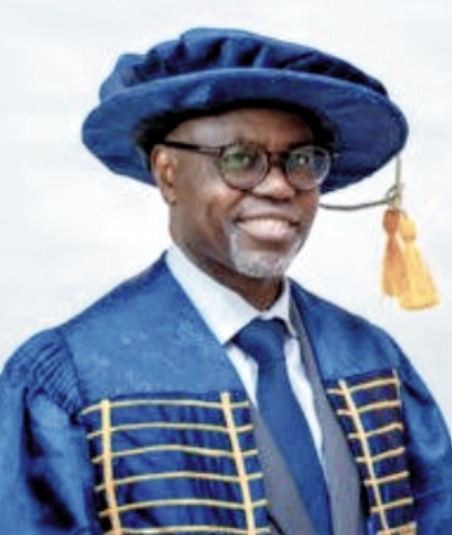
VC reaffirms commitment to peace, security training
By Isaac Lewu
The Vice Chancellor of the University of Ilorin, Prof. Wahab Olasupo Egbewole, SAN, has reaffirmed the commitment of the University to producing highly skilled peace and security professionals.
Prof. Egbewole gave this assurance last Tuesday (July 21, 2026) during a three- day capacity building retreat of the Centre for Peace and Strategic Studies (CPSS) in collaboration with Savannah Centre for Dipolmacy, Democracy and Development (SCDDD) held at the Auditorium Basement. The retreat was themed “Building Practitioner Competencies in Peace and Security Monitoring for Early Warning Architecture”.
The Vice Chancellor, who was represented by the Dean of the Faculty of Arts and immediate past Director of the Centre, Prof. Ibrahim AbdulGaniyu Jawondo, described peace and security as essential foundations for sustainable national development.
Prof. Egbewole said that the University remains committed to equipping students and professionals with the interdisciplinary knowledge and practical skills required to prevent conflicts, strengthen early warning systems and promote peaceful coexistence.
He specifically commended the Centre for sustaining quality capacity-building programmes that address emerging security challenges.
The legal luminary urged participants to make the most use of the expertise of the resource persons, noting that the calibre of facilitators assembled for the retreat reflects the commitment of the University to exposing participants to global best practices in peacebuilding, conflict prevention and strategic security management.
In his welcome address, the Director of the Centre, Prof. Abdul-Jelil Gbemisola Animasawun, explained that the Centre had deliberately positioned itself to bridge the gap between theory and practice by equipping its students with practical competencies in peacebuilding and conflict management.
Prof. Animasawun noted that the postgraduate programmes of the Centre had continued to distinguish themselves through sustained collaboration with industry practitioners, adding that the partnership with the SCDDD would further expose participants to decades of practical experience in early warning systems and local peace infrastructures.
The Director charged participants to see themselves as critical stakeholders in Nigeria’s peace and security architecture rather than passive observers. He explained that the country’s formal peace institutions alone could not effectively monitor every community, stressing that participants were expected to acquire the conceptual knowledge, methodological skills and practical competence required to design and defend effective early warning architectures capable of addressing security challenges in their localities.
Prof. Animashawun expressed optimism that the three-day practitioner training would produce a new generation of peace advocates capable of strengthening community-based conflict prevention mechanisms.
He commended the unwavering support of the Vice Chancellor, Prof. Wahab Olasupo Egbewole, SAN, for the Centre’s programmes, expressing confidence that the collaboration with SCDDD would contribute meaningfully to enhancing peace and security across Nigeria.
One of the facilitators at the retreat and Executive Director at SCDDD, Ambassador Sani Saulawa Bala, urged participants to see themselves not as passive learners but as active contributors to peacebuilding and national development. He stressed that effective leadership in peace and security requires collaboration, strategic thinking and a commitment to continuous learning.
Ambassador Bala, a seasoned diplomat and administrator with over three decades of public service experience, said sustainable peace can only be achieved through dialogue, strong institutions and sound policy implementation.
The former Nigerian Ambassador to the State of Qatar noted that participants must combine the knowledge gained during the retreat with practical solutions to address emerging security and governance challenges.
Also speaking, Lt. Col. Abdulwahab Ademola Lawal, said participants should see themselves not as passive learners but as partners in progress, stressing that practical experience and humility are essential to achieving meaningful outcomes in peacebuilding and strategic studies.
He explained that successful peace and security initiatives thrive on collaboration, discipline and continuous learning.
The facilitator noted that sound theory must always be complemented with practical field experience to effectively address contemporary security challenges, describing the command structure as a major driver of success in security operations. He explained that a well-established and effective chain of command enables institutions to function efficiently while providing opportunities for personnel to learn from experienced professionals.
In her remarks, an Associate Professor at the CPSS, Dr Ruth Abiola Adimula, urged participants to embrace the retreat as a platform for strengthening their professional competence and commitment to sustainable peacebuilding. She explained that the growing complexity of contemporary security challenges requires practitioners to combine sound academic knowledge with practical skills, ethical leadership and effective collaboration.
Dr Adimula, who is also a legal luminary, encouraged participants to remain committed to continuous learning and innovative problem-solving.
She added that the Centre would continue to equip professionals with the knowledge and capacity required to promote peace, security and national development.
Dignitaries at the event included Prof. S. A. Raji, Dr Jean-Marie Kasonga Mbombo, Dr AbdulLateef Dasola Hussain, Dr Samuel Abidemi, Zainab Bolanle Abdullahi, Mrs Damilola Akanbi, Mrs Esther Obafemi, among others.
