Use AI to boost research, not replace rigour, Egbewole tells AWAU
By Muizdeen Adewole
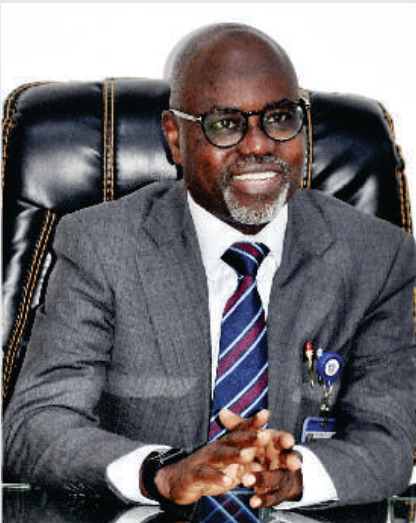
The Vice Chancellor of the University of Ilorin, Prof. Wahab Olasupo Egbewole, SAN, has charged scholars across West Africa to embrace Artificial Intelligence (AI) in order to enhance research productivity while protecting academic integrity, transparency and scholarly rigour.
Declaring the AWAU Monthly Colloquium open last Saturday, (July 12, 2026) via Zoom, Prof. Egbewole said the timing was critical as universities navigate rapid technological change. He urged member institutions to leverage AI to accelerate research output, expand African language datasets, indigenous knowledge, oral histories and other local data that remain underexplored.
Delivering the lead paper titled, “Methodology Transformation: Integrating AI into Research Workflows – without Surrendering Rigour”, an Associate Professor of Computer Science at Olabisi Onabanjo University, Ago-Iwoye, Dr Sakinat Oluwabukonla Folorunso, said AI has become integral to contemporary research and should be viewed as a capable research assistant rather than a replacement for human intellect and scholarly responsibility.
Dr Folorunso explained that AI has the capacity to support virtually every stage of the research process, including literature discovery, research design, data collection, qualitative and quantitative analysis, academic writing, grant proposal development and teaching. She, however, cautioned that while AI can automate labour-intensive tasks, it must never be entrusted with critical scholarly judgement.
The scholar maintained that researchers remain solely responsible for the accuracy, originality and integrity of their work, warning that AI-generated outputs should always be subjected to rigorous verification. She noted that the increasing sophistication of AI systems does not eliminate their tendency to fabricate references, misrepresent facts or generate convincing but inaccurate information.
Dr Folorunso further called on universities to develop harmonised policies on AI disclosure, data protection, and postgraduate supervision. “Let us use AI to become more productive, but not at the expense of the rigour that defines credible scholarship. Our accountability and intellectual honesty must travel with us into this new workflow,” she said.
To ensure responsible AI adoption, Dr. Folorunso introduced the “ADAPT Framework”, a five-step guide encouraging researchers to “assess” the task, “delegate” appropriate responsibilities to AI “anchor” prompts in disciplinary expertise, “probe” every output through careful verification, and “take” ownership of every aspect of the final work.
She also identified major risks associated with indiscriminate AI use, including fabricated citations, hidden algorithmic bias, data privacy concerns, erosion of critical thinking skills and the gradual loss of researchers’ unique academic voices. She advised scholars never to upload confidential research data or identifiable participant information to public AI platforms without appropriate ethical clearance and institutional approval.
Dr Folorunso said although AI is transforming the methods of scholarship, it cannot replace the values that define quality research. “While technologies will continue to evolve, academic rigour, intellectual honesty, accountability and ethical responsibility must remain non-negotiable pillars of credible scholarship,” she said.
Among the dignitaries who attended the event were the Vice Chancellor of Thomas Adewumi University, Prof. Francisca Oladipo; the University Librarian, University of Ilorin, Prof. Kamaldeen Tunde Omopupa; and the Acting Dean of Student Affairs, University of Ilorin, Dr. Alex Akanmu, who moderated the session.
