
UNILORIN/RUDN confab urges FG to prioritise ethical AI, cyber-security
By Mustafa Abubakar
Participants at the Four-Day Biennial International Conference organised by the Faculty of Communication and Information Sciences, University of Ilorin, in collaboration with the Faculty of Philology, RUDN University, Russia, have called on governments and policymakers to urgently develop ethical and rights-based Artificial Intelligence frameworks capable of protecting citizens from digital threats and algorithmic harm.
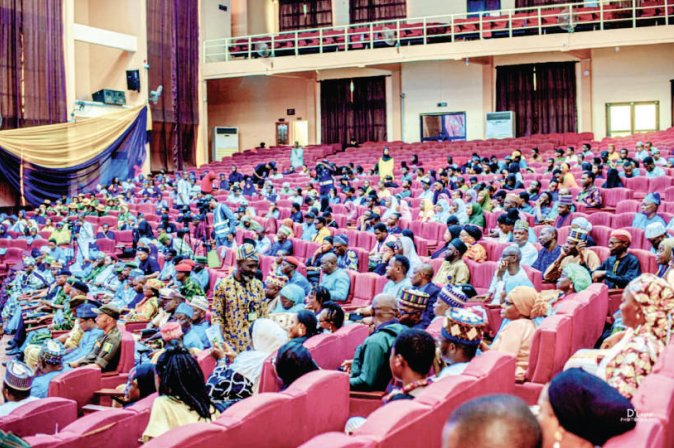
The call was contained in a communique issued penultimate Friday (May 15, 2026) at the end of the Conference, themed “Disruptive Technology: Human and Artificial Intelligence in the Digital Economy,” held at the University Auditorium between May 12 and 15, 2026.
The Conference attracted academics, researchers, communication professionals, legal scholars, computing scientists, postgraduate students, and policy practitioners from Nigeria and several countries including Russia, Malaysia, Algeria, Vietnam, China, Ghana, and Zimbabwe.
Participants observed that Artificial Intelligence disruption is no longer a future occurrence but a present reality shaping governance, institutions, communication systems, and everyday human activities globally.
The Conference affirmed that AI systems operate on correlations rather than conscience, stressing that Artificial Intelligence should not be viewed as a rival to humanity but as a complementary tool capable of supporting human creativity, judgement, and productivity.
Participants,however, expressed concern over the increasing sophistication of cybersecurity threats such as deepfakes, phishing, and vishing attacks targeting institutions, students, and digital systems.
The Conference, therefore, urged governments to treat cybersecurity as a national priority through coordinated policies and stronger institutional responses capable of addressing emerging digital threats.
Participants also called for the development and implementation of national AI strategies backed by investment in digital infrastructure to ensure that the benefits of the digital economy extend beyond urban centres to rural communities and underserved populations.
The communiqué further advocated transparent legal and regulatory frameworks that would protect citizens from algorithmic harm, make automated decisions contestable, and hold institutions accountable for the deployment of AI systems.
The Conference also called on universities and professional bodies to urgently review academic curricula in order to produce graduates who are not only technologically competent but ethically grounded with sound judgement, critical thinking ability, and strong public responsibility.
Participants further recommended collaborative ethical frameworks involving academia, media practitioners, communication professionals, and policymakers to combat disinformation, deepfakes, and algorithmic bias within digital communication ecosystems.
The Conference maintained that the true value of disruptive technology lies in partnership between human intelligence and Artificial Intelligence rather than the displacement of human capacities.
Participants also pledged continued engagement on issues relating to technology, governance, communication, and human development, while committing to the publication of the proceedings of the Conference.
