Tinubu tasks VCs on production of future-ready graduates
By Tajudeen Babamale
The future of the Nigerian university system came under intense focus last Tuesday (August 18, 2026) as the University of Ilorin hosted the 37th General Assembly Conference of the Committee of Vice Chancellors of Nigerian Universities (CVCNU). The Conference attracted top government officials, Vice Chancellors, university administrators, regulators and other stakeholders who called for urgent reforms to reposition the nation’s universities for global competitiveness.
Held at the University Auditorium and themed “Building Resilient Universities for Nigeria”, the Conference provided a platform for stakeholders to deliberate on strengthening university leadership, innovation, research, funding, governance and partnerships to prepare Nigerian institutions for emerging challenges and opportunities.
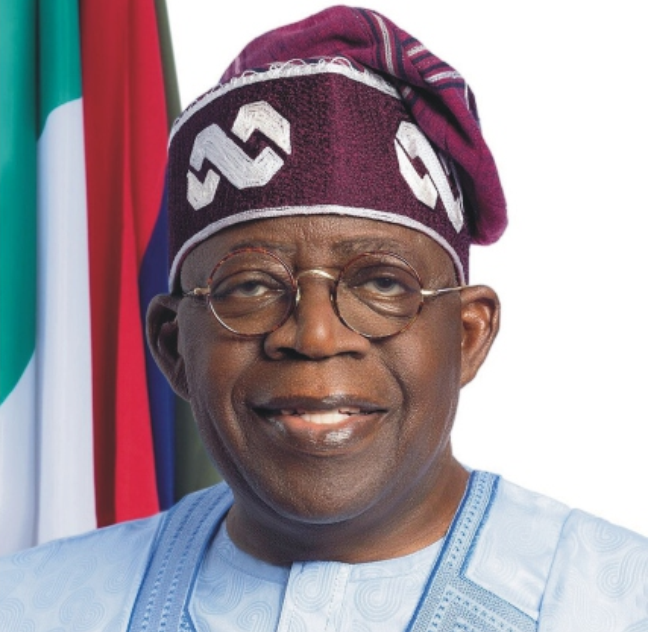
In his remarks while declaring the Conference open, President Bola Ahmed Tinubu, GCFR, challenged the CVCNU to reposition the nation’s universities towards producing graduates equipped to thrive in a rapidly changing world driven by Artificial Intelligence, digital learning, automation, biotechnology, renewable energy and other emerging technologies.
Represented by the Minister of State for Education, Prof. Suwaiba Said Ahmad, the President urged university leaders to focus not only on producing graduates but also on determining the quality, relevance and capabilities of those graduates to contribute meaningfully to Nigeria’s economic and social transformation.
He said the changing nature of work and the skills required to succeed globally had made it imperative for Nigerian universities to strengthen the quality, relevance, accessibility, affordability and accountability of tertiary education, noting that universities must move beyond their traditional role of awarding degrees to becoming centres of knowledge creation, innovation, critical thinking, entrepreneurship, cultural development and national transformation.
President Tinubu urged the CVCNU and university leaders to strengthen research and innovation, particularly by building partnerships with government, industry, development partners and communities.
While identifying agriculture, healthcare, education, energy, transportation, environmental sustainability, security, manufacturing and digital technology as areas where universities should increasingly deploy research and innovation to address national challenges, the President also called for stronger university-industry partnerships, expanded internship and work-based learning opportunities, entrepreneurship development and curricula that respond effectively to labour-market needs.
According to him, graduates should leave universities not merely as job seekers, but as value creators, innovators, entrepreneurs, professionals, researchers and responsible citizens.
The President’s charge was reinforced by the Speaker of the House of Representatives, Hon. Tajudeen Abbas, who urged Nigerian universities to modernise their curricula, strengthen governance and deepen industry partnerships to produce the skilled workforce required to drive the country’s ambition of building a trillion-dollar economy.
The Speaker, who was represented by the Chairman, House Committee on University Education, Hon. Abubakar Hassan Fulata, said that resilient universities must be financially sustainable, strong in governance and capable of responding effectively to domestic challenges and global changes.
He said that the 10th House of Representatives had prioritised education through specialised committees and improved legislative oversight while supporting reforms introduced by the President Bola Ahmed Tinubu Administration.
Hon. Abbas said that the Nigerian Education Loan Fund had processed more than 1.6 million student applications, alongside TETFund infrastructure investments aimed at improving learning facilities, laboratories and workshops.
He added that Nigeria’s trillion-dollar economic ambition required a highly educated and skilled workforce, urging universities to discard obsolete curricula and develop programmes aligned with the global digital economy.
He assured the University community of the continued support of the National Assembly through legislation, regulatory frameworks and sustainable funding, urging Vice Chancellors to use the CVCNU General Assembly to develop practical roadmaps for building resilient, innovative and globally competitive universities.
Meanwhile, the Kwara State Governor, Mallam Abdulrahman Abdulrazaq, commended the hosting of the Conference in Ilorin, describing it as a reflection of the reputation and importance of UNILORIN to Kwara State and Nigeria.
The Governor, who spoke through the Kwara State Commissioner for Education and Human Capital Development, Dr Muhammad-Lawal Olalekan Olohungbebe, said that the state government recognised the importance of education and continued to invest across all levels, from basic to tertiary education.
He said that the state had strengthened basic education through the KwaraLEARN programme, which monitors teachers’ attendance and classroom activities, thereby helping to improve teaching and prepare pupils for future academic success.
Mallam Abdulrazaq commended the University of Ilorin and the CVCNU for bringing leading academics to the state, noting that the wealth of experience assembled at the conference presented a valuable opportunity for Kwara State.
He urged participants to ensure that their deliberations produced practical solutions capable of positively impacting communities rather than remaining on paper, while thanking the Vice Chancellors for choosing Ilorin as the venue of the conference.
In his welcome address, the Secretary-General of the CVCNU and former Vice-Chancellor of the Federal University of Gashua, Prof. Andrew Haruna, urged Vice Chancellors to strengthen unity, cooperation and mutual support in advancing Nigeria’s University system.
Prof. Haruna called on University leaders to embrace cooperation, consultation and collective purpose over institutional isolation, stressing that the CVCNU should not only become active during crises but should provide a strong community where Vice-Chancellors support and celebrate one another.
He encouraged Vice Chancellors to attend their colleagues’ convocations, identify with institutional milestones and offer support during difficult periods.
Prof. Haruna also urged members to participate actively in the Committee’s activities by attending General Assembly meetings, engaging in Federal, State and Private University Cohort meetings, honouring invitations from colleagues and contributing to collective deliberations aimed at strengthening Nigerian universities.
In his own address, the Executive Secretary of TETFund, Arc. Sonny S. T. Echono, FNIA, also commended Nigerian universities for their resilience in sustaining academic activities and producing professionals despite the numerous challenges confronting the nation’s higher education system.
Represented by the Vice Chancellor of Thomas Adewumi University, Oko-Irese, Prof. Francisca Onaolapo Oladipo, the TETFund boss described the Conference theme as a reflection of the realities faced by Vice Chancellors in managing universities amid financial constraints, industrial actions and other disruptions.
He traced the history of the CVCNU to October 1962, when five Vice Chancellors met at the University of Ibadan and resolved that Nigerian universities should collectively confront the challenges facing the sector.
Arc. Echono noted that 64 years after, the initiative had matured into an annual General Assembly that had survived successive governments, economic reforms and various challenges confronting the university system.
He described the gathering as more than a conference, calling it a “covenant” inherited by the current generation of University leaders to strengthen the nation’s higher education system.
He stressed that Vice Chancellors carry responsibilities beyond the interests of their individual institutions, noting that they also bear the hopes and aspirations of young Nigerians who believed that university education can transform their lives.
