Okoro charges Muslims on rewards, consequences of good, bad deeds
By Mustafa Abubakar
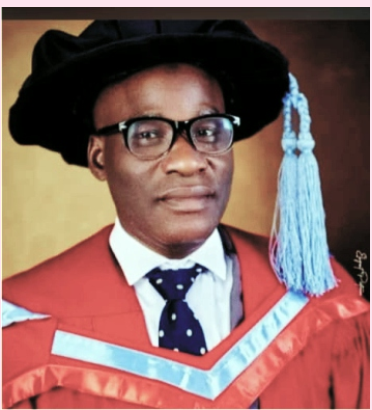
A Professor at the Department of Industrial Chemistry, University of Ilorin, Hussein Kehinde Okoro, has charged individuals to be mindful of their deeds, stressing that every good or bad action has consequences in this world and the hereafter.
Prof. Okoro gave the admonition penultimate Sunday (August 9, 2026) while delivering a lecture, titled “The Reward for Good and Bad Deeds in this World and Hereafter” at The Companion Non-Elective Conference held at the Late Mustapha Akanbi Library, Ilorin.
He explained that good deeds are those that bring peace and tranquility to the soul, while bad deeds cause uneasiness in the soul and chest, noting that individuals possess an inner witness that makes them conscious of the nature of their actions.
The don stated that good deeds include fulfilling responsibilities, honouring parents, keeping promises and trusts, showing kindness, helping others and maintaining good relationships.
He added that acts of kindness, generosity, courtesy and other positive contributions should not be underestimated, noting that even seemingly small good deeds are recognised and rewarded.
Prof. Okoro further explained that bad deeds range from major sins to minor wrongs, stressing the need for individuals to avoid actions that cause harm, injustice, dishonesty or suffering to others.
He particularly emphasised the importance of taking responsibility for wrong actions, seeking forgiveness and making amends with those who have been wronged.
According to him, good deeds attract rewards both in this world and the Hereafter, including peace, increased provision, love of Allah and people, and protection from calamities.
He added that rewards for good deeds in the hereafter could be multiplied from tenfold to 700-fold and beyond, while bad deeds could result in uneasiness, hardship, loss of blessings, punishment and regret.
Prof. Okoro supported his message with verses from the Qur’an, including Surah An-Nahl 16:97, which promises a good life and reward for righteous conduct, and Surah Az-Zalzalah 99:7–8, which teaches that whoever does an atom’s weight of good or evil will see it.
He also cited Surah Al-An’am 6:160, which states that a good deed is rewarded tenfold while an evil deed is recompensed only with its equivalent, underscoring the principle of divine justice.
The don drew from the sayings of Prophet Muhammad (SAW), including the teaching that no good deed should be regarded as insignificant. He encouraged individuals to follow a bad deed with a good one that can erase it and to maintain good character in their dealings with others.
Quoting Umar ibn Al-Khattab, Prof. Okoro urged individuals to “call yourselves to account before you are called to account”, encouraging regular self-assessment and correction of shortcomings.
He also cited Ali ibn Abi Talib as encouraging individuals to do good without belittling any act of righteousness, noting that no good deed is lost with Allah.
Stressing the principle of “Al-Jazaa’ min jinsil ‘amal”, “the reward is of the same type as the deed”, Prof. Okoro explained that helping others, covering people’s faults and showing kindness attract corresponding rewards, while arrogance and other negative conducts have their consequences.
He noted that no good deed is wasted, as even a smile, removing harm from a road or offering a kind word can constitute sadaqah and would be recorded.
