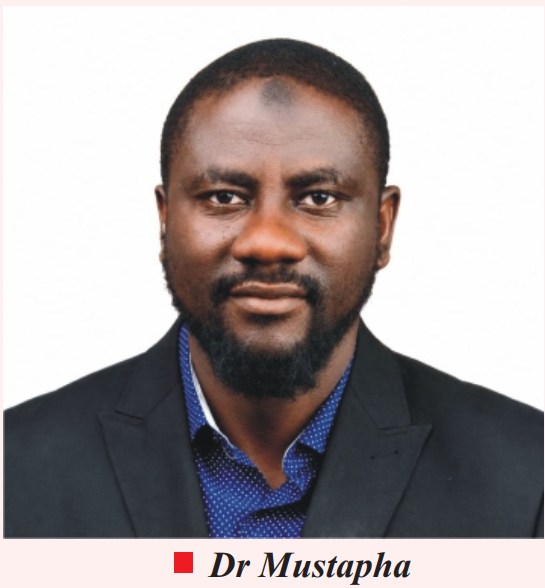
How I emerged UNILORIN researcher of the year — Mustapha
By Mustafa Abubakar
The University of Ilorin Researcher of the Year 2026, Dr S. I. Mustapha, has attributed his emergence to sustained contributions to sustainable energy, biomass and waste conversion, biofuel production, catalysis and environmental remediation.
The researcher, who disclosed this last Tuesday (October 27, 2026), in a chat with UNILORIN Bulletin in his office, said the recognition was based on his broad research portfolio rather than a single project. According to him, his work addresses interconnected challenges of energy security, waste management and environmental pollution.
Dr Mustapha, who teaches at the Department of Chemical Engineering, said that his research investigates how microalgae, agricultural biomass and other organic wastes can be converted through thermochemical processes into bio-oil, hydrogen-rich gases and other valuable products. “Rather than being attributable to a single project, my research portfolio addresses the interconnected challenges of energy security, waste management, and environmental pollution,” he said.
He explained that his research also involves developing advanced catalysts to improve product quality and conversion efficiency, as well as converting biomass-derived materials into adsorbents for removing pollutants from contaminated water. He said the approach seeks to transform underutilised biological resources and waste into valuable products while reducing environmental burdens and supporting a circular economy in which waste is regarded as a resource rather than a disposal problem.
The researcher said his work was motivated by Nigeria’s energy challenges, increasing agricultural and municipal waste, environmental pollution and the need for sustainable industrial processes. “My research journey has been driven by a passion for transforming renewable and waste feedstocks into clean energy carriers, value-added chemicals, and functional materials for environmental remediation,” he said, adding that locally available resources such as microalgae and agricultural residues could provide alternative feedstocks for producing energy carriers and valuable chemicals.
Dr Mustapha said one significant finding from his microalgae conversion research was that appropriate catalyst selection could improve bio-oil quality by reducing undesirable oxygen-containing compounds and nitrogen content while enhancing its fuel properties. He added that another important contribution was the integration of biomass conversion with environmental remediation, demonstrating the possibility of combining energy recovery with wastewater treatment within a circular resource-use framework.
He said his broader research also covers hydrogen as a clean energy carrier, biomass-derived materials for pollutant removal and catalytic processes for biodiesel production. He noted that his current research focus is on moving findings from laboratory-scale investigations towards scalable, economically viable and industrially relevant processes through process optimisation, modelling, techno-economic assessment and environmental evaluation.
“Our ultimate goal is to develop sustainable, locally adaptable solutions for converting biomass and waste into valuable fuels, chemicals, and environmental remediation materials, with the potential for pilot-scale demonstration and eventual commercial application,” he said.
However, he identified funding, specialised equipment, analytical characterisation and the cost of consumables as major challenges. He said collaborations with research teams at the Durban University of Technology and the University of the Witwatersrand, South Africa, had strengthened his work through knowledge exchange and complementary expertise.
Looking ahead, Dr Mustapha said he would deepen research into converting microalgae and other biomass resources into biofuels, hydrogen-rich gas and valuable chemicals, while exploring the reuse of resulting carbon-rich materials for environmental remediation.
He called for sustained investment in early-career researchers, modern laboratory infrastructure and research capacity development, while acknowledging the support of the University Management under the leadership of Prof. Wahab Olasupo Egbewole, SAN.
He stressed that stronger funding from government, industry and research partners remained essential, particularly in capital-intensive engineering fields.
Dr Mustapha said the recognition was both an honour and an opportunity to mentor emerging researchers, strengthen collaborations and advance research towards practical applications.
