Egbewole seeks visionary leaders for Africa’s transformation
By Tajudeen Babamale and Bashirat Omotosho
The Vice Chancellor of the University of Ilorin, Prof. Wahab Olasupo Egbewole, SAN, has called for the emergence of visionary leaders across Africa, saying that the continent’s sustainable development depends on leaders who can anticipate the future, plan strategically and inspire positive changes.
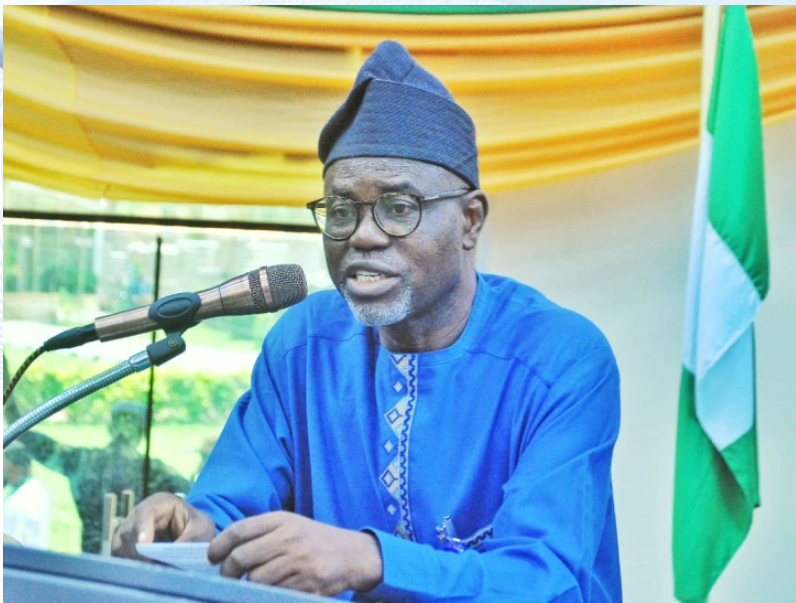
Prof. Egbewole made the call last Thursday (July 23, 2026) while declaring open the 2026 Leadership Summit organised by the Centre for Management and Leadership Ilorin (CMLI) at the University Auditorium.
Represented by the Deputy Vice Chancellor (Management Services), Prof. Olalere Adeyemi, the Vice Chancellor described visionary leadership as the ability to think beyond the present and deliberately pursue long-term goals that benefit society. He said societies blessed with good leadership are better positioned to strengthen institutions, promote sustainable development and improve the quality of the lives of their citizens.
Describing the University of Ilorin as a hub for nurturing future leaders through quality education, character development and impactful leadership, the Vice Chancellor urged participants to maximise the opportunities offered by the Summit.
Delivering the keynote address, titled “Leading Beyond Today: Developing Visionary Leaders for Sustainable Development,” Prof. Paul Akinnubi of the Department of Educational Management, Al-Hikmah University, Ilorin, explained that leadership is not merely about achieving immediate results but about inspiring innovation, promoting inclusiveness and making decisions that positively impact future generations.
He urged both emerging and established leaders to embrace visionary leadership capable of addressing contemporary challenges while laying a solid foundation for sustainable development.
According to him, leadership should be seen as a lifelong commitment to service, continuous learning and nation-building. He added that sustainable development can only be achieved through ethical governance, human capital development, environmental responsibility and effective collaboration across sectors.
Prof. Akinnubi also challenged young leaders to become agents of positive transformation, maintaining that investing in visionary leadership today is essential for building resilient institutions, thriving communities and a prosperous society.
In a leadership masterclass, titled “Visionary and Strategic Leadership,” a management specialist at the University of Ilorin, Prof. Umar Gunu, charged participants to develop the foresight, resilience and strategic thinking required to navigate an increasingly complex world.
The don noted that visionary leaders anticipate future challenges, identify emerging opportunities and inspire others towards shared goals. He further urged participants to embrace collaboration, adaptability and continuous learning, adding that enduring leadership is measured by the lasting impact it leaves on society.
Earlier, in her welcome address, the Ag. Director of CMLI, Dr Adeola Odebode, urged participants to ensure that the knowledge gained at the Summit translates into practical actions capable of transforming institutions and society.
She said the success of the Summit should be measured not by the quality of presentations or attendance figures but by the positive impact participants make after the programme. According to her, if every participant influences just ten other people through ethical and exemplary leadership, the resulting ripple effect would extend across universities, workplaces, communities and the nation.
Dr Odebode described leadership development as one of the greatest investments individuals and institutions can make, stressing that stronger leaders build stronger institutions and more prosperous societies. She also appreciated the Vice Chancellor for his unwavering support for the Centre and its leadership development programmes.
A panel discussion, involving representatives of government, academia, industry, community leadership and emerging leaders, also explained the qualities of effective leadership. The panelists agreed that good leaders must possess emotional intelligence, integrity, trustworthiness, the ability to delegate responsibilities and the willingness to continually assess and improve themselves.
The panel featured the Permanent Secretary, General Services, Governor’s Office, Alhaji Shuaib Abdulganiyu; the President of the University of Ilorin Postgraduate Students’ Association (POGSASS), Mr Kuranga Hakeem Abiodun; the Head of the Department of Finance, University of Ilorin, Dr Bilqees Ayoola Abdulmumin; a retired Permanent Secretary and Magaji of Erubu, Ilorin, Dr. Subair Erubu; and the Provost of College of Health Sciences, Kwara State University, Malete, Prof. Saliu Moyosore Ajao.
Speaking on higher education, Prof. Ajao advocated greater autonomy for Nigerian universities, arguing that institutions should be allowed to exercise their statutory powers without undue external interference.
He expressed concerns over the National Universities Commission’s Core Curriculum and Minimum Academic Standards (CCMAS), contending that the policy undermines the traditional role of University Senates in determining academic curricula.
