Egbewole seeks credible, peaceful 2027 elections
.EFCC Chairman pledges collaboration with UNILORIN
By Isaac Lewu
The Vice Chancellor of the University of Ilorin, Prof. Wahab Olasupo Egbewole, SAN, has called on all stakeholders in Nigeria’s democratic process to work collectively towards ensuring peaceful, credible and transparent elections in 2027, stressing that the integrity of the electoral process remains fundamental to democratic consolidation, national unity, and sustainable development.
Prof. Egbewole made the call last Wednesday (June 10, 2026) at the Centre for Peace and Strategic Studies (CPSS) Special Series, themed “De-Risking and Mobilising Critical Stakeholders for Peaceful and Credible 2027 Elections in Nigeria”, held at the University Auditorium.
The Vice Chancellor reaffirmed the commitment of the University to advancing research, dialogue and community engagement in support of democratic governance and national development. He expressed confidence that the stakeholders’ engagement would generate practical strategies for reducing electoral risks, strengthening voter confidence, promoting inclusiveness and fostering a culture of peace before, during and after the 2027 General Elections.
Prof. Egbewole described the presence of the Executive Chairman of the Economic and Financial Crimes Commission (EFCC), Mr Ola Olukoyede, at the event as a rare privilege and commended the Commission for its professionalism, fairness and unwavering commitment to the fight against corruption. He noted that under Olukoyede’s leadership, the EFCC has continued to strengthen public confidence in democratic institutions through impartial and effective enforcement of anti-corruption laws.
The Vice Chancellor, who is also a member of the Body of Benchers, added that despite the progress recorded in Nigeria’s democratic journey, challenges such as electoral violence, misinformation, voter apathy, political intolerance, insecurity and vote-buying continue to threaten the credibility of elections.
He, therefore, advocated sustained collaboration among electoral bodies, security agencies, political actors, the media, civil society organisations, the academic community and citizens to address these challenges through civic education, policy reforms and proactive engagement.
In his keynote address, the Executive Chairman of the EFCC, Mr Olanipekun Olukoyede, expressed the Commission’s readiness to collaborate with the University of Ilorin in promoting credible electoral processes, anti-corruption studies and peaceful democratic practices.
Mr Olukoyede welcomed the University’s proposal to establish a Chair in Peaceful Electoral Processes and assured the institution of the Commission’s support towards its realisation.
He also disclosed that the EFCC would explore possible collaboration with the University on postgraduate programmes in credible electoral processes as well as financial crimes and anti-corruption studies, adding that a joint committee could be constituted to develop modalities for the proposed partnership.
In recognition of his outstanding contributions to the fight against corruption and the promotion of institutional integrity, Mr Olukoyede was conferred with the Anti-Corruption Champion and Guardian of Integrity Award by the Centre.
In his welcome address, the Director of the CPSS, Prof. Abdul-Jelil Gbemisola Animasahun, explained that the event was conceived as a strategic intervention aimed at fostering peaceful, credible and secure elections ahead of the 2027 General Elections.
Prof. Animasahun said the initiative would bring together key stakeholders, including security agencies, electoral managers, anti-corruption bodies, civil society organisations, media practitioners and private sector actors, to collectively address emerging threats to Nigeria’s democratic process. He described elections as a “risk environment” requiring systematic analysis, anticipation and mitigation, adding that lessons from previous electoral cycles underscored the need for proactive measures to safeguard democratic stability and national cohesion.
The Director disclosed that the CPSS intends to generate policy-oriented recommendations that would guide government institutions, security agencies and development partners in strengthening electoral integrity, expressing optimism that the University, through the CPSS, would continue to provide a neutral and credible platform for dialogue, consensus-building and democratic advancement.
Delivering a goodwill message on behalf of the Resident Electoral Commissioner (REC) for Kwara State, Mallam Ahmed Yusha’u Garki, the Administrative Secretary of the Independent National Electoral Commission (INEC) in the state, Alhaji Abdulazeez Ibrahim, commended the EFCC Chairman for championing initiatives that promote integrity, accountability and credible electoral processes in Nigeria.
He described the lecture as timely and relevant, noting that its messages align with INEC’s mandate of conducting free, fair and transparent elections.
Alhaji Ibrahim assured participants that the Commission would embrace the ideals and lessons from the lecture and continue to promote ethical conduct, transparency and accountability in the electoral process.
He further stressed that sustained collaboration between electoral and anti-corruption institutions remains essential to strengthening democracy and ensuring the credibility of elections in the country.
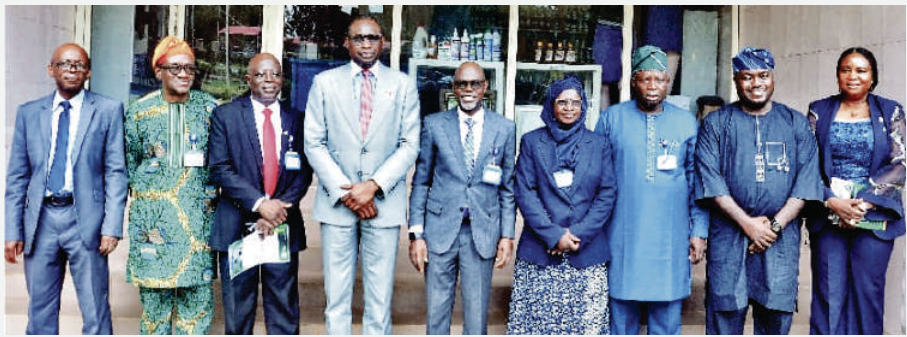
Among dignitaries present at the event were members of the University Governing Council, Prof. Usman Adebimpe Raheem and Prof. AbdulRazak Olubusuyi Kilani; the Deputy Vice-Chancellor (Academic), Prof. Moji Taibat Bakare-Odunola; the Deputy Vice-Chancellor (Research, Technology and Innovation), Prof. Muhtar Adeiza Etudaiye; the Registrar, Mr Mansur Adeleke Alfanla; the Bursar, Mr Abiodun Lawal; the University Librarian, Prof. Kamaldeen Tunde Omopupa; as well as staff and students of the Centre for Peace and Strategic Studies, representatives from various security institutions, political parties and other stake holders.
