Egbewole reaffirms support for varsity media outfits
By Mustafa Abubakar and Isaac Lewu
The Vice Chancellor of the University of Ilorin, Prof. Wahab Olasupo Egbewole, SAN, has reaffirmed the commitment of the University Administration to sustaining and strengthening all media platforms of the institution, describing them as critical instruments for projecting the image of the University and promoting national development.
Prof. Egbewole stated this last Tuesday (June 9, 2026) while speaking at the 13th anniversary celebration of the establishment of the UNILORIN Chapel of the Nigeria Union of Journalists (NUJ) and fund raising for its proposed Secretariat building at the University Auditorium.
The Vice Chancellor commended the UNILORIN NUJ Chapel for its resilience, consistency, and dedication over the past 13 years.
He described the media as the “Fourth Estate of the Realm” and a critical voice in nation-building, expressing optimism that discussions at the event would generate practical solutions to strengthen national cohesion and development.
The Vice Chancellor stressed that the University would continue to support and sustain all its communication platforms, stressing that allowing any of them to decline would weaken institutional visibility and voice.
He also pledged continued partnership with the Directorate of Corporate Affairs and relevant stakeholders to reposition the University’s media organs for greater efficiency.
Delivering the Anniversary Lecture, titled “Media and National Unity: One Country, Many Narratives – Media’s Role in Nation Building,” Prof. Rasaq Muhammad Adisa of the Department of Mass Communication emphasised the role of the media in shaping perceptions and promoting unity in a diverse country like Nigeria.
He stated that journalists, policy makers, and media practitioners are key stakeholders in national cohesion, urging them to avoid sensationalism and divisive reporting.
Prof. Adisa explained that national integration efforts such as the NYSC scheme, Federal Character Principle, and Unity Schools were deliberately designed to promote unity, inclusion, and mutual understanding among Nigerians.
He also traced the historical role of the Nigerian press, noting that newspapers such as the West African Pilot, Nigerian Tribune, and Daily Times played key roles in anti-colonial struggles and national consciousness.
He, however, expressed concern over declining investigative journalism, fake news, sensational reporting, and politically influenced narratives in contemporary media practice as he warned that such trends weaken trust and threaten national unity.
To address these challenges, Prof. Adisa recommended ethical journalism, improved investigative reporting, strategic agenda-setting, mentorship of young journalists, collaboration among media organisations, responsible use of social media, and better welfare for practitioners.
Also in his address, the Director of Corporate Affairs, University of Ilorin, Mr Kunle Akogun, described the anniversary as a significant milestone in the history of the Chapel and the University media outfits.
He described the celebration as both a homecoming and recognition of media practitioners within the University system.
Mr Akogun noted that the establishment of the Chapel has been helping to bridge the gap between academic administration and professional journalism practice, adding that members have consistently promoted the University’s achievements across platforms such as UNILORIN Bulletin, UNILORIN FM, UNILORIN online media, and UNILORIN Television.
He explained that journalists in the University play the important role of translating Senate decisions, research outputs, and institutional policies into public-friendly information.
He also warned about the misuse of Artificial Intelligence and citizen journalism, noting that while both can support journalism, they are increasingly being used to spread misinformation and reduce professionalism.
Mr Akogun called on the University Management to continue to invest in capacity building, digital tools, and staff training and retraining.
He further appealed for the return of UNILORIN FM to the global Radio Garden platform, recalling that it was the first campus radio station in the North-Central region to achieve international visibility through the platform in 2014.
Earlier, the Chairman of the NUJ UNILORIN Chapel, Mr Tijani Adekola Adewoyin, described the anniversary as both a celebration of progress and a reaffirmation of future aspirations.
He noted that since its establishment in 2013, the Chapel has remained a credible voice within the University, consistently promoting professionalism, integrity, and responsible journalism.
According to him, the Chapel has contributed to projecting the image of the University while also training and mentoring journalists through workshops, seminars, and professional engagements.
Mr Adewoyin explained that the proposed secretariat project is a historic milestone for the Chapel, which has operated without a permanent office since inception.
He said the proposed facility would include a newsroom, resource library, digital media studio, and training centre for journalists and media professionals.
He appealed for support from the University management, NUJ Kwara State Council, Chapel members, and other stakeholders through financial donations, building materials, equipment, and professional services.
He further highlighted challenges confronting journalism practice, including fake news, misinformation, AI-generated content manipulation, and economic pressures affecting media independence.
Despite these challenges, Mr Adewoyin reaffirmed the Chapel’s commitment to truth, accuracy, fairness, balance, and responsible journalism.
The event renewed commitments from members and stakeholders toward the successful completion of the proposed secretariat project.
Participants pledged support in the form of financial contributions, materials, equipment, and professional expertise to ensure the realization of a permanent institutional home for the Chapel.
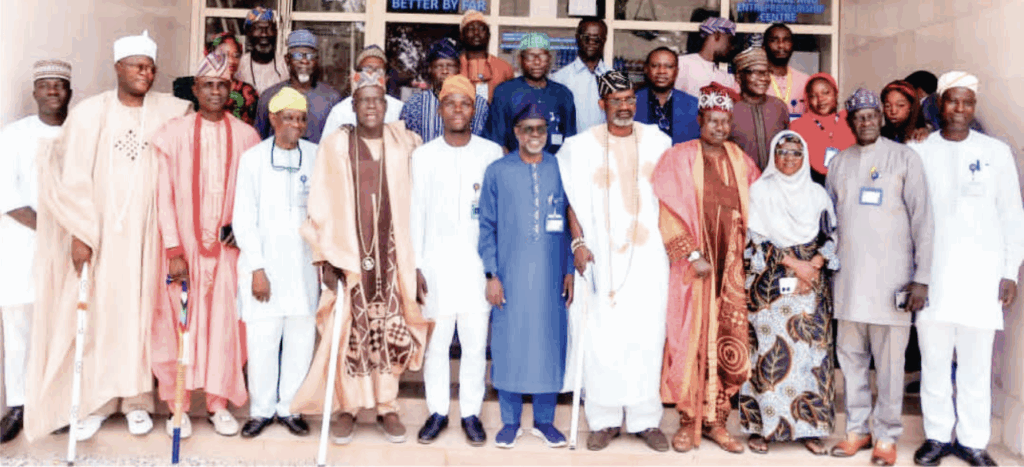
The event brought together journalists, academics, University administrators, traditional rulers, media practitioners, student journalists, and stakeholders from within and outside Kwara State.
