Egbewole canvasses ethical AI integration in archives mgt
By Isaac Lewu and Bashir Dawodu
The Vice Chancellor of the University of Ilorin, Prof. Wahab Olasupo Egbewole, SAN, has called for responsible integration of Artificial Intelligence (AI) into archives and records management systems to enhance institutional memory preservation and improve information accessibility in developing countries.
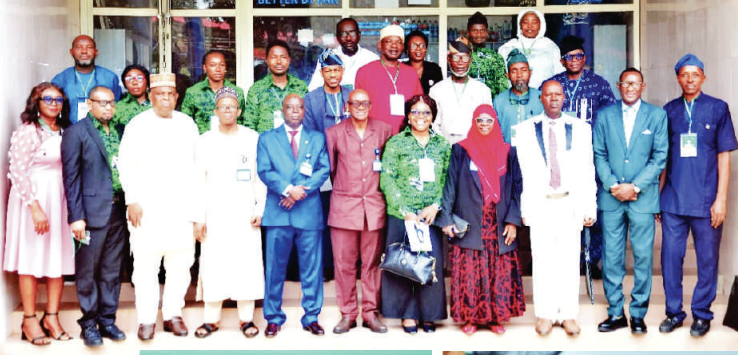
Prof. Egbewole made the call last Monday (May 18, 2026) while speaking at the opening ceremony of a conference orgsnised by the Society of Nigerian Archivists, themed “Artificial Intelligence and the Future of Archives and Records Management in Developing Countries”.
The Vice Chancellor, who was represented by the Deputy Vice Chancellor (Management Services), Prof. Olalere Adeyemi, pointed out that rapid technological advancement has transformed the creation, storage, retrieval, and protection of records, stressing that universities and research institutions must embrace innovation to remain globally competitive and administratively efficient.
Prof. Egbewole explained that AI has enormous potentials in document digitisation, data classification, preservation of historical materials, and enhancement of research activities. He added that intelligent systems could help institutions address challenges associated with manual record keeping and delays in information retrieval.
The renowned legal luminary charged scholars, archivists, information managers, and students to utilise the conference as a platform for developing practical solutions capable of strengthening archival culture across Africa and other developing regions.
While commending the organisers for choosing a timely theme, Prof. Egbewole reaffirmed the commitment of the University to supporting research, technological advancement, and collaborations that would promote sustainable digital archives, teaching, learning, and national development.
In his address, the National President of the SNA, Mrs Yemisi Grace Asaju-Oyebo, described the Conference, hosted by the University of Ilorin, as a strategic platform for repositioning archival and records management practice in line with emerging global realities driven by Artificial Intelligence (AI).
Mrs Asaju-Oyebo noted that the gathering was designed to expose participants to contemporary trends shaping the heritage preservation space.
The SNA President, who described herself as a proud product of the University, said that the conference became necessary due to the growing relevance of AI in information management and heritage preservation globally. She stressed that Africa, particularly Nigeria, must embrace modern technological innovations in order not to be left behind in the evolving archival profession.
According to her, the Society chose to engage students of the Departments of History and Library and Information Science to encourage younger generations to actively participate in the profession and sustain the nation’s archival heritage.
Mrs Asaju-Oyebo also disclosed that the Conference would witness the induction of new members into the Society, inauguration of new executive officers, and recognition of outstanding academic performances among students from the participating Departments.
She commended the management of the University of Ilorin for supporting the Conference and appreciated members, sponsors, volunteers, and participants for contributing to the success of the programme while urging attendees to use the opportunity to interact, learn, and deepen their understanding of records management, archiving, and information management.
In his keynote address, a Professor in the Department of Library and Information Science, University of Ilorin, Prof. Adeyinka Tella, said the integration of Artificial Intelligence (AI), digital technologies, and advanced information systems is transforming archives and records management from traditional custodial practices into intelligent, user-centred systems.
According to him, AI enhances information organisation, retrieval, preservation, and decision-making through automated classification, metadata enhancement, predictive preservation, and intelligent retrieval systems.
Prof. Tella further noted that challenges such as inadequate infrastructure, limited digital literacy, ethical concerns, algorithmic bias, and weak institutional readiness continue to hinder adoption, particularly in developing countries.
He added that despite these barriers, combining human judgment with machine intelligence offers more ethical and efficient archival practices. He stressed that sustainable smart archival ecosystems require investment in infrastructure, policy development, and continuous capacity building.
Also in his presentation, Dr Ifeyinwa Angela Okafor of Ikoyi Club 1938 Archives, whose paper was titled “Enhancing Archival Practices through Emerging Technology: AI, Blockchain and Archival Trust”, noted that the advent of Information and Communication Technologies (ICT) and the digital transformation of archives have converted archives into data-driven systems, with archival professionals increasingly seeking the application of emerging technologies in archival management.
Presenting another paper, titled “Neural Network Application for Indigenous Knowledge Classification and AI-Driven Knowledge Management in Nigerian University Libraries,” Mr George Osas Eromosele of the University of Ilorin Library,said the study applied neural network techniques to classify indigenous knowledge resources and evaluated the impact of AI-driven knowledge management in Nigerian university libraries.
Highlights of the event included the conferment of honorary awards for members and sponsors, as well as cultural displays.
