Egbewole attributes 99% programme accreditation to quality library resources
By Tajudeen Babamale
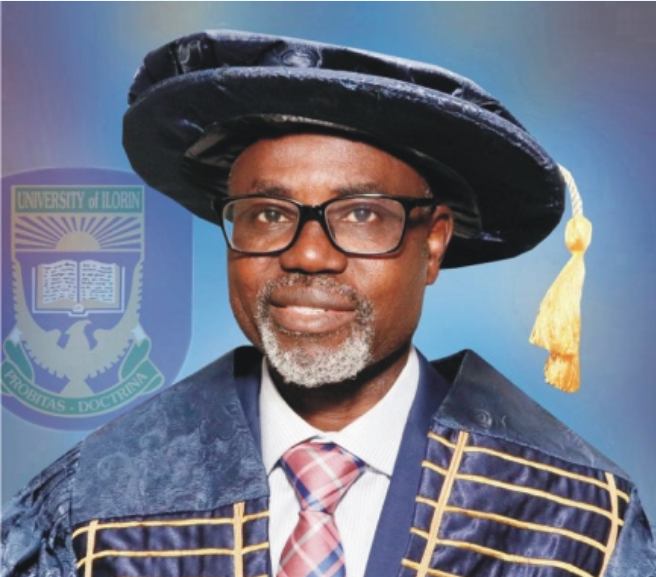
The Vice Chancellor of the University of Ilorin, Prof. Wahab Olasupo Egbewole, SAN, has attributed the accreditation of 99 per cent of the academic programmes of the University to the high quality of its library resources and staff.
Prof. Egbewole stated this last Tuesday (October 27, 2026) when he received the National Executive Officers of the Cataloguing, Classification and Indexing (CCI) Section of the Nigerian Library Association (NLA), who paid him a courtesy visit ahead of their 46th Annual Seminar/Workshop hosted by the University of Ilorin’s Library from October 26 to 30, 2026.
Represented by the Deputy Vice Chancellor (Research, Technology and Innovation), Prof. Muhtar Adeiza Etudaiye, the Vice Chancellor described the Library as central to the existence of the University, noting that it serves as the custodian of knowledge and plays a vital role in teaching, learning and research.
Prof. Egbewole welcomed members of the Association’s Executives Committee to the University and expressed hope that their stay would be fruitful.
He also acknowledged the emerging challenges confronting the library profession and expressed optimism that the workshop would help identify practical solutions and strategies for addressing them.
The Vice Chancellor assured the visitors of the commitment of the University to supporting initiatives that promote professional development, strengthen library services and enhance knowledge management in higher education.
The leader of the CCI Section, Prof. Racheal Opeyemi Odunlade, appreciated the University management for its hospitality and support, noting that the University could have declined the request to host the event following its recent engagement with the parent body of the Nigerian Library Association. She, however, commended the Vice Chancellor for welcoming the section and providing an enabling environment for the professional gathering.
Speaking on the workshop’s theme, “Universal Bibliographic Control: Exploring the Impact of AI on Global Coordination of Metadata,” Prof. Odunlade said the event was timely, given the growing influence of Artificial Intelligence (AI) on how information is created, organised, described, discovered, shared and preserved.
She noted that emerging technologies offer opportunities to improve cataloguing, classification, subject indexing, authority control, multilingual metadata creation and information accessibility across different platforms and countries.
She explained that Universal Bibliographic Control promotes international cooperation by ensuring that bibliographic records created in one country are accessible and usable worldwide, thereby improving metadata consistency, interoperability, resource sharing and information discovery.
However, Prof. Odunlade cautioned that AI adoption must address concerns about accuracy, algorithmic bias, cultural representation, intellectual property, data privacy, language diversity and the preservation of human expertise.
Prof. Odunlade also stressed the need for information professionals to ensure that AI upholds the core values of librarianship, including equitable access to information, intellectual freedom, accuracy and the preservation of humanity’s intellectual heritage. She urged African professionals to ensure that indigenous languages, local knowledge systems, cultural heritage materials and scholarly outputs are adequately represented in global metadata systems, while actively contributing to the development of international standards and policies.
In a keynote address, titled “Universal Bibliographic Control: Exploring the Impact of Artificial Intelligence on Global Coordination of Metadata,” a Professor of Library and Information Science at the University of Ilorin, Adeyinka Tella, identified the need for libraries and information professionals to embrace technological advancements while maintaining professional standards.
Represented by Dr Aderinola Ololade Dunmade, Prof. Tella explained the importance of ensuring that bibliographic records created in one country remain accessible and usable worldwide to promote international cooperation, reduce duplication of effort and improve access to knowledge across geographical and linguistic boundaries.
He also noted the need for African information professionals to ensure that indigenous languages, local knowledge systems, cultural heritage materials and scholarly outputs are adequately represented in global metadata systems.
He, however, recommended strengthening AI literacy among cataloguers through training in AI evaluation, prompting, data quality and model limitations; adopting linked-data approaches by improving identifiers, authority control and readiness for the Bibliographic Framework (BIBFRAME); developing institutional AI metadata policies that provide for human review, data provenance and bias checks; and investing in open infrastructure, including repositories, shared vocabularies, persistent identifiers and digital preservation systems.
