Buratai tasks Nigerian youths on national service
By Mustafa Abubakar and Isaac Lewu
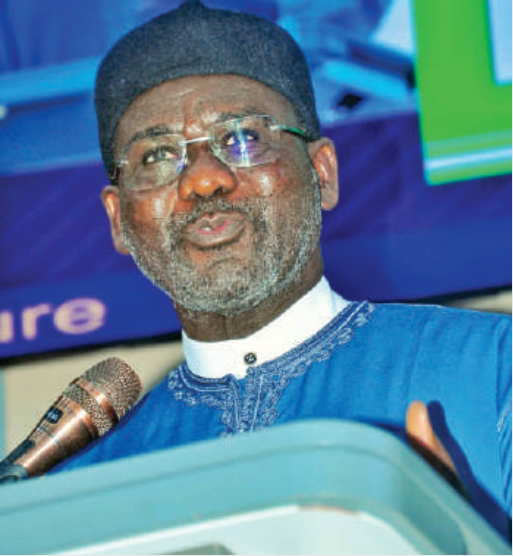
A former Chief of Army Staff, Lt. Gen. Tukur Yusuf Buratai, has called on Nigerian youths to embrace service in the Armed Forces as a noble national responsibility capable of safeguarding the future of the country and strengthening national security.
Lt. Gen. Buratai made the call last Saturday (May 23, 2026) while speaking at the Distinguished Personality Lecture of the Department of Criminology and Security Studies, University of Ilorin, as part of activities marking the 12th anniversary of the Department. The Lecture was titled “The Armed Forces of Nigeria and National Security: The Youth and National Security Aspirations.”
Addressing students, scholars, security experts, and other participants at the University Auditorium, the retired Army General urged young Nigerians to stop viewing career in the Armed Forces as a last resort.
Lt. Gen. Buratai said, “I call on the youth of the University of Ilorin and Nigeria at large to see the Armed Forces not as a last resort but as a noble calling. National aspirations cannot be realised in an insecure environment. Your country needs your brains, your brawn, and your bravery. Enlist, engage, and secure your future.”
He observed that Nigeria currently stands at a critical juncture where national security and youth aspirations must converge for sustainable peace and development.
Lt. Gen. Buratai, who is also a former Ambassador to the Republic of Benin, lamented that despite the progress made by the Armed Forces, Nigeria still faces enormous security threats, including insurgency, banditry, separatist agitations, cybercrime, piracy, kidnapping, oil theft, and transnational organised crime.
He maintained that Nigerian youths remain central to resolving these challenges because of their demographic strength, patriotism, and technological adaptability.
He further noted that military service instills discipline, civic responsibility, leadership, and national integration while also providing career development and technical skills acquisition in fields such as Engineering, Logistics, Medicine, Information Technology, and Aviation.
Lt. Gen. Buratai further emphasised that youths play indispensable roles in intelligence gathering, cyber defence, counterterrorism operations, and community-based early warning systems.
“When youth aspirations are neglected, young people become vulnerable to recruitment by criminal and extremist groups”, he said, adding that “when they are properly engaged and empowered, they become the nation’s strongest line of defence.”
Speaking on Nigeria’s security history, Lt. Gen. Buratai traced the evolution of the Armed Forces from the colonial era to the modern Nigerian Army, Navy, and Air Force, noting that the institution remains constitutionally empowered to defend Nigeria’s territorial integrity and support civil authorities in restoring order.
He described the Nigerian Civil War as one of the most painful episodes in the country’s history, stressing that it remains a lesson on the dangers of disunity and unresolved grievances.
The retired Army brass hat also highlighted peacekeeping missions undertaken by Nigerian troops in Congo, Liberia, Sierra Leone, Darfur, Mali, and Guinea-Bissau, alongside domestic operations such as Operation HADIN KAI and Operation WHIRL STROKE.
Lt. Gen. Buratai stressed that military action alone would not solve Nigeria’s security challenges, advocating a whole-of-society approach involving intelligence-led operations, community policing, socio-economic interventions, and youth engagement.
As part of his recommendations, he proposed a massive youth recruitment drive into the Armed Forces and paramilitary agencies, as well as the establishment of a National Youth Service for Security involving civic security training for graduates.
In his remarks, the Vice Chancellor of the University, Prof. Wahab Olasupo Egbewole, SAN, commended the Nigerian Armed Forces for their enduring contributions to national stability, regional peacekeeping, and humanitarian services across Africa.
According to him, the Armed Forces have remained central to peace and security within Nigeria and the West African sub-region through several peacekeeping missions and humanitarian interventions.
The Vice Chancellor, who was represented by the Deputy Vice Chancellor (Management Services), Prof. Olalere Adeyemi, added that the lecture was timely because it offered students the opportunity to learn from experienced military leaders and understand their roles in promoting national development and security consciousness.
In his goodwill message, the Governor of Kwara State, Mallam AbdulRahman AbdulRazaq, commended the Department of Criminology and Security Service on its contributions to security education and national development.
The Governor, who was represented by Alhaji Sa’ad Salahudeen, described the theme of the Lecture as timely and relevant to Nigeria’s current realities, encouraging young Nigerians to remain patriotic, disciplined, and committed to national unity and peaceful coexistence.
Earlier in her welcome address, the Head of the Department, Dr Monsurat Isiaka, described the lecture as both “a statement of identity, purpose, and aspiration” and a celebration of 12 years of institutional growth and impact.
According to her, the lecture was organised not only to discuss pressing national security issues, but also to commemorate the Department’s journey of academic development, research advancement, and professional contributions over the past 12 years.
Dr Isiaka disclosed that many alumni of the Department currently serve in critical national security institutions, including the Nigeria Police Force and the Department of State Services, while others have become lecturers in universities within and outside Nigeria.
Highlights of the event included the presentation of awards to Lt. Gen. Buratai, a former Vice Chancellor of the University, Prof. Abdulganiyu Ambali; the Vice Chancellor, Prof. Wahab Olasupo Egbewole, SAN, and other distinguished personalities for their selfless service to the nation and contributions to the academic community.
