
Muslims urged to sustain gains of Ramadan for societal reforms
By Mustafa Abubakar
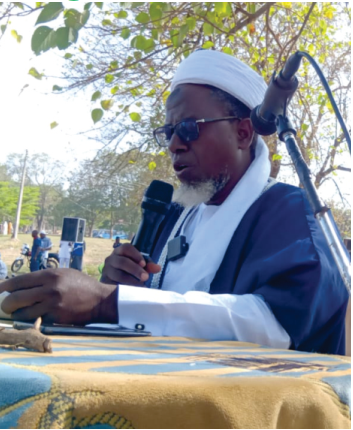
The Chief Imam of the University of Ilorin, Prof. Nasir AbdusSalam, has urged Muslim faithful to sustain the spiritual, moral, and ethical lessons acquired during the just concluded Ramadan as a pathway to personal and societal reforms.
Prof. AbdusSalam gave the charge last Friday (March 20, 2026) while delivering the special sermon to mark this year’s Eid-ul-Fitr festival at the University Eid Praying Ground.
Speaking on the theme, “Ramadan: A Path to Personal and Societal Reform”, the cleric-don emphasised that Eid should not be reduced to mere celebration, declaring that “Eid is not merely a cultural festivity, but a celebration of spiritual success and moral transformation.”
Stressing that the true essence of Eid lies in moral transformation, the Professor of Chemistry quoted renowned Islamic scholar Ibn Rajab al-Hanbali, who pointed out that “Eid is not for the one who wears new clothes, but for the one whose record of obedience has increased.”
Prof. AbdusSalam explained that the Ramadan fast enables believers to overcome the influence of Nafs al-Ammarah (the soul inclined to evil), adding that “our hearts are brought closer to what the Qur’an describes as Qalbun Saleem—the sound heart that qualifies one for Paradise.”
Citing relevant portions of the Holy Quran, the Chief Imam reminded the congregation of “the Day when wealth and children will not benefit anyone except one who comes to Allah with a sound heart.” He urged Muslims not to lose the spiritual gains attained during the holy month.
Prof. AbdusSalam, who is a former Director of the Central Research Laboratory of the University, further stressed the principle of accountability, noting that Ramadan teaches self-accountability, which begins internally before manifesting externally in the society. He stated that “fasting produces internal ethical regulation, which is more powerful than external law.”
The Chief Imam enjoined Muslims to “hold yourselves accountable before you are held accountable, and weigh your deeds before they are weighed,” adding that internal moral discipline remains the foundation of a just society.
He warned that the absence of accountability leads to societal decay, stressing that “when self-accountability disappears, leaders become oppressive, institutions become corrupt, and citizens lose trust in the system.”
Prof. AbdusSalam outlined three key post-Ramadan responsibilities for Muslims.
He urged believers to maintain God-consciousness at all times, quoting the Prophet Muhammad (SAW) who said, “Fear Allah wherever you are, follow a bad deed with a good one to erase it, and treat people with good character.”
He also advised Muslims to preserve the spiritual habits cultivated during Ramadan, citing the prophetic teaching that “the most beloved deeds to Allah are those that are consistent, even if small.”
The Chief Imam further called for compassion towards the less privileged, stressing that “as some celebrate in joy, others are still struggling for basic survival and must not be forgotten.”
Prof. AbdusSalam equally urged Muslims to remember the victims of insecurity, noting that “many of the sufferings we witness today are man-made and require collective moral responsibility.”
He called for prayers for national peace and for the reformation of those engaged in violence, while also urging leaders to implement policies that would reduce poverty and insecurity.
The Chief Imam emphasised the need for peaceful coexistence, stating that “we must live in peace with our neighbours and turn our diversity to strength rather than division.”
He prayed for the University community, national leaders, and the country at large as he sought divine guidance, stability, and prosperity for leaders and followers at all levels.
Eid-el-Fitr marks the end of Ramadan and symbolises gratitude, reflection, and renewed commitment to righteous living.
