NIA DG seeks measures against foreign interference in 2027 elections
By Mustafa Abubakar
The Director-General of the National Intelligence Agency (NIA), Ambassador Mohammed Mohammed, has called for proactive national security measures, stronger electoral laws and collective action by relevant stakeholders to safeguard the 2027 general elections against foreign interference, Artificial Intelligence (AI)-generated disinformation and media manipulation.
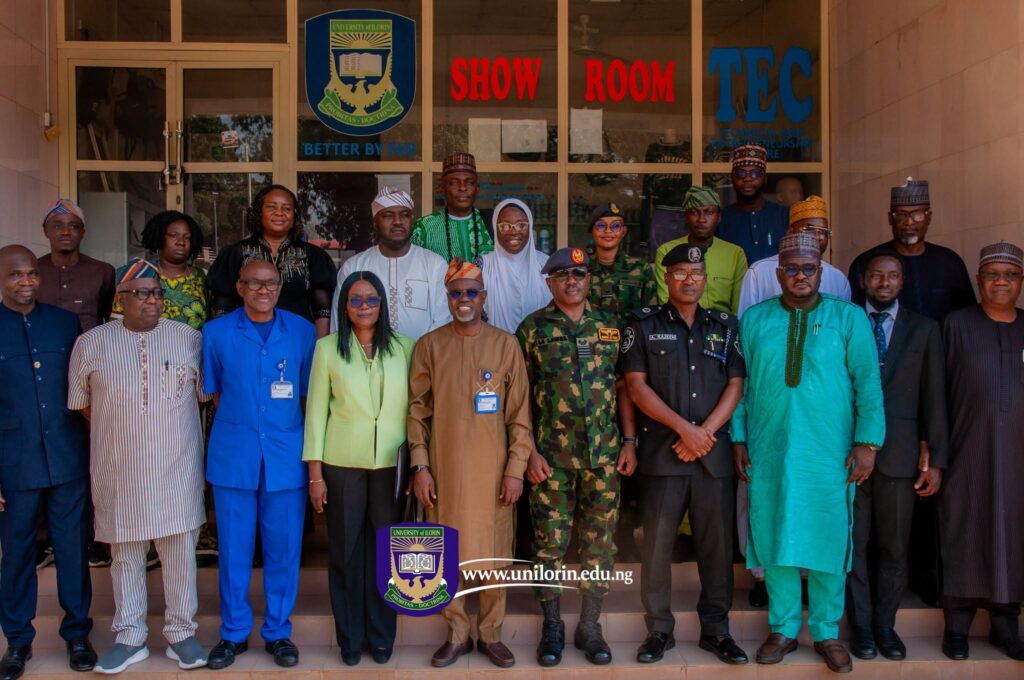
Ambassador Mohammed made the call last Monday (November 16, 2026) at the second edition of the High-Level Speaker Series organised by the Centre for Peace and Strategic Studies (CPSS), University of Ilorin, held at the University Auditorium.
Represented by Ambassador Jadesola Adesuyi, the Director-General, in his paper, titled “Nigeria’s 2027 Elections: Safeguarding against Foreign Influence Operations, AI Disinformation, and Media Manipulation,” warned that foreign influence operations, AI-generated disinformation and media manipulation pose serious threats to the credibility of Nigeria’s 2027 general elections.
He observed that Nigeria’s electoral challenges had evolved beyond traditional practices such as ballot snatching to include Foreign Information Manipulation and Interference (FIMI), deepfakes, fabricated identities, doctored videos, voice cloning and fake election results.
The security chief, who hails from Kwara State, explained that such threats could create fear, undermine public confidence in democratic institutions and discourage citizens from exercising their constitutional right to vote.
Citing the 2023 general elections, Ambassador Mohammed noted that the proliferation of false information about voter registration, political candidates, election results, polling procedures and political violence contributed to voter apathy, fear and low turnout.
He further disclosed that fact-checkers documented more than 1,200 viral false stories during the 2023 elections, while 63 per cent of presidential and National Assembly election-related claims were false.
The NIA boss identified Nigeria’s religious, ethnic and socio-political vulnerabilities as factors that could be exploited by foreign actors and their local proxies to influence electoral outcomes.
He warned that the increasing accessibility of AI had made information manipulation cheaper, faster and more dangerous, noting that fabricated audio recordings, videos and election result sheets could be produced within minutes and circulated rapidly across digital platforms.
According to him, electoral integrity depends largely on the integrity of the information ecosystem through which citizens access political information, assess candidates and interpret electoral developments.
He also highlighted the role of social media platforms, messaging applications, local influencers and informal communication networks in the spread of misleading political narratives.
On measures to address the threats, Ambassador Mohammed acknowledged steps being taken by the Independent National Electoral Commission (INEC), including improvements in the technical management of its Result Viewing Portal (IReV), deployment of the Bimodal Voter Accreditation System (BVAS), establishment of an Artificial Intelligence Unit and collaboration with social media platforms to identify and remove AI-generated false information.
He stressed the need for stronger collaboration among electoral authorities, intelligence and security agencies, civil society organisations and the media.
Among other recommendations, he called for restrictions on foreign donations to political campaigns, investment in indigenous technology, prohibition of foreign consultants in Nigerian elections and the review of electoral education programmes to incorporate news verification and identification of fake information.
He also advocated the amendment of the Electoral Act to criminalise the malicious deployment of AI-generated media, voice cloning and deepfakes targeting political candidates, electoral officials and the integrity of political campaigns.
The Director-General further urged the protection of Nigeria’s electoral databases against cyber interference and the strict enforcement of electoral laws.
Emphasising the importance of grassroots engagement, Ambassador Muhammed noted that approximately 40 per cent of Nigerians obtained information through offline channels, including radio, markets, motor parks and community meetings.
He consequently called for information verification mechanisms in local languages, involving traditional rulers, market leaders and other community stakeholders.
He warned that winning the online information battle while neglecting offline communication channels would amount to little achievement.
In his welcome address, the Director of the Centre for Peace and Strategic Studies, Prof. G. A. Animasawun, said the engagement was organised to draw attention to the threats posed by information manipulators, distorters and conflict entrepreneurs to Nigeria’s electoral process and national security.
He described the guest lecturer as an experienced personality with the requisite knowledge and institutional responsibility to address local and foreign threats to the country’s information ecosystem.
The Vice Chancellor, Prof. Wahab Olasupo Egbewole, SAN, said universities had a responsibility to contribute to changing the narrative surrounding elections in Nigeria by providing factual information and addressing myths, falsehoods and misleading narratives.
He recalled that the first edition of the High-Level Speaker Series featured the Chairman of the Economic and Financial Crimes Commission (EFCC), adding that the Centre intended to extend the conversation to other critical national security institutions.
A major highlight of the programme was a drama presentation by students of the Department of Performing Arts, titled “The Butler and the Machete,” which illustrated the dangers of electoral violence, political manipulation, fake news and the exploitation of vulnerable citizens.
The presentation called on youths, market women, media practitioners, security personnel, traditional rulers and religious leaders to mobilise their respective constituencies for peaceful elections.
The students particularly emphasised the need for media practitioners to verify information before publication and for young people to reject inducements to participate in electoral thuggery.
The event attracted representatives of the intelligence and security community, INEC, the Nigeria Police Force, the National Orientation Agency (NOA), academics, students and other stakeholders.
