
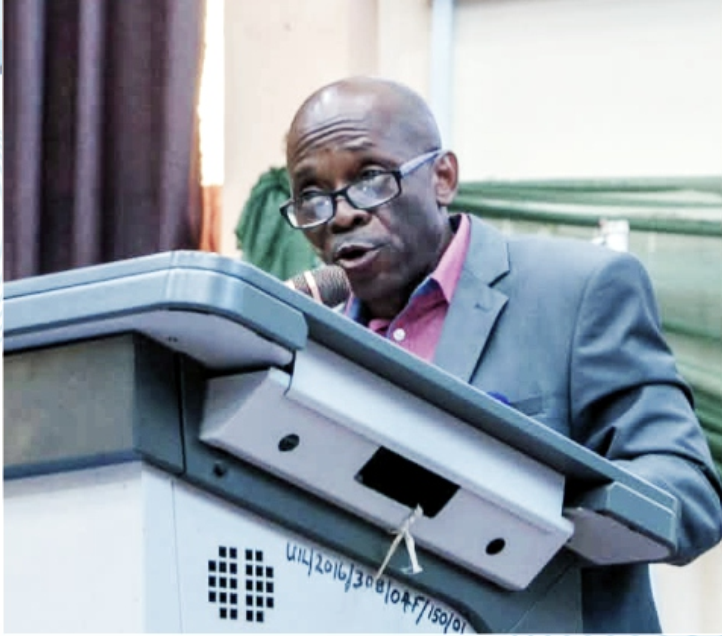
Experts seek community-driven approach to peace, food security
By Mustafa Abubakar
Experts in peacebuilding, agriculture and security have called for stronger community participation, improved agricultural livelihoods and collaboration among stakeholders to address insecurity, strengthen food security and promote sustainable development in the country.
They made the call last Tuesday (November 10, 2026) at the International Conference on Peace and Sustainable Development, jointly organised by the Centre for Peace and Strategic Studies and the Department of Agricultural Extension and Rural Development, University of Ilorin.
The three-day conference had as its theme, “Enhancing Local Agency for Human Security and Sustainable Development in Fragile Contexts.”
Declaring the Conference open, the Vice Chancellor, Prof. Wahab Olasupo Egbewole, SAN, represented by the Deputy Vice Chancellor (Research, Technology and Innovation), Prof. Muhtar Adeiza Etudaiye, described it as timely, given the security challenges, humanitarian crises, displacement and food insecurity confronting Nigeria and other countries.
Prof. Egbewole commended the organisers for bringing scholars, policymakers and practitioners together, stressing that sustainable development could hardly thrive without security. He called for inclusive development, stronger community participation and collaboration among universities, government, traditional institutions, security agencies, farmers, pastoralists and development partners.
In his presentation, Dr Olawale Muyideen Ismail of the African Leadership Centre, School of Global Affairs and Deputy Associate Dean for Doctorial studies, SSPP Faculty, King’s College London, examined changing global power relations, emerging security challenges and opportunities for indigenous peacebuilding.
In his paper, titled “Seizing the Moment: Agenda for Transforming ‘Local’ Agency in Peacebuilding in a Changing Global Order,”
Dr Ismail advocated recognition of local communities as decision-makers rather than mere beneficiaries, alongside greater involvement of women, youths and traditional institutions, indigenous knowledge systems and equitable partnerships.
Also in his own paper, the Vice Chancellor of Taraba State University of Tropical Agriculture, Science, Technology and Climate Action, Gembu, Prof. Demo Joab Usman Kalla, described agriculture as a strategic instrument of peacebuilding.
In the paper, titled “Cultivating Peace and Resilience: Enhancing Local Agency through Agriculture for Human Security and Sustainable Development in Fragile Contexts,” Prof. Kalla argued that hunger was a security threat and that meaningful human security required food and livelihood security.
He identified farmer-herder conflicts, competition over land and water, climate change, poverty and weak institutions as interconnected challenges. He advocated climate-smart agriculture, improved rural infrastructure, irrigation, agricultural financing and stronger farmers’ cooperatives.
Prof. Kalla also called for inclusive resource management, dialogue and mediation, stressing that communities should be architects and drivers of agricultural transformation.
In his remarks, the Chairman of the Poultry Association of Nigeria, Kwara State Chapter, Mallam Saliu Ayuba Ajibola, urged participants to disseminate knowledge gained at the Conference to grassroots farmers and called for proactive government action on food security.
Similarly, the Kwara State Chairman of the All Farmers Association of Nigeria, Mallam Shuaib Ajibola, called for stronger protection of farmers, farmlands and agricultural investments. He disclosed that AFAN had over 40,000 registered farmers across Kwara’s 16 local government areas.
Mallam Ajibola proposed community-based agricultural security arrangements involving farmers’ associations, traditional rulers, local governments and security agencies. He also advocated improved access to finance, infrastructure, technology and markets, as well as stronger university-farmer collaboration.
The Director of Research at the Strategic Intelligence Management Institute, Abuja, Ambassador Alex Ogochukwu, urged the Conference to produce practical recommendations with clear implementation strategies, insisting that communities must own solutions to their challenges.
The Director-General of the Miyetti Allah Cattle Breeders Association of Nigeria, Mallam Saliu Ahmed, highlighted the association’s presence across states and the 774 local government areas, saying its grassroots structure could facilitate information dissemination while complementing government and security agencies.
Earlier, the Director of the Centre for Peace and Strategic Studies, University of Ilorin, Prof. Gbemisola Animasawun, said insecurity directly affected farms, markets, grazing routes and rural livelihoods.
Citing examples of community mediation and agricultural interventions, Prof. Animasawun maintained that peace and prosperity were interdependent, warning that dialogue without livelihood opportunities would be unsustainable.
The Director cautioned that local agency should not absolve government of its responsibilities, stressing that communities needed institutional support to sustain peace. He urged participants to produce implementable recommendations, declaring that “only organic peace is sustainable.”
In her remarks, the Head of the Department of Agricultural Extension and Rural Development, University of Ilorin, Prof. Sijuwade A. Adebayo, expressed appreciation to the University Management, particularly the Vice Chancellor, Prof. Wahab Olasupo Egbewole, SAN, for supporting the conference.
