UNILORIN VC urges medical librarians to embrace AI
By Mustafa Abubakar amd Wunmi Alao
The Vice Chancellor of the University of Ilorin, Prof. Wahab Olasupo Egbewole, SAN, has urged medical librarians to embrace Artificial Intelligence (AI) and other emerging technologies to enhance access to health information resources and services.
The Vice Chancellor gave the charge last Tuesday (September 6, 2026) at the 35th Annual Conference of the Medical Library Association of Nigeria (MLANG) held at the Auditorium Basement. The Conference was themed “Reimagining Medical Libraries for Better Access to Health Information Resources and Services in the AI Era”
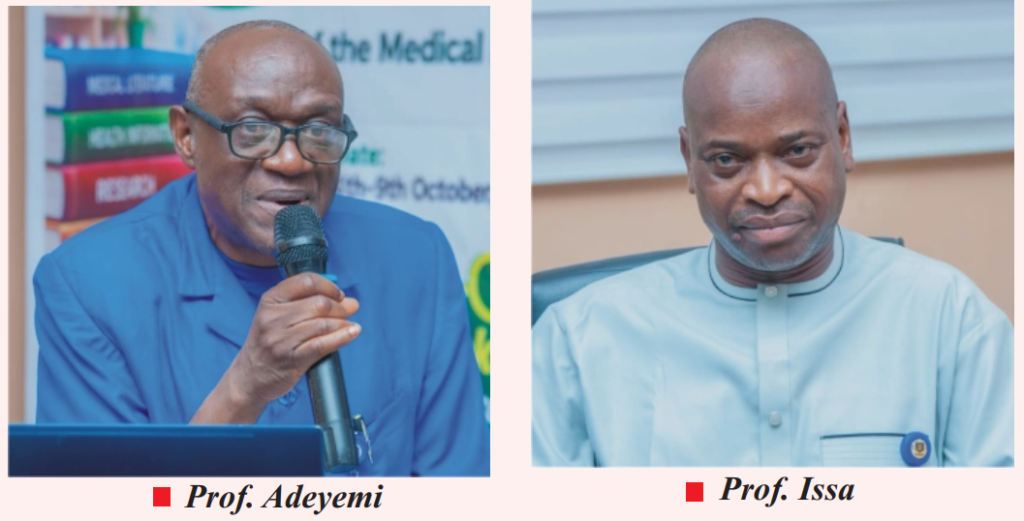
Prof. Egbewole, who was represented by the Deputy Vice Chancellor (Management Services), Prof. Olalere Adeyemi, described the theme of the Conference as apt, relevant and timely, noting that AI had become a disruptive force in the global information landscape, particularly in the medical sciences. He stressed that its benefits could only be fully realised where adequate, relevant and accessible health information resources and services were available.
The Vice Chancellor commended MLANG on its foresight and congratulated the association on 35 years of existence, while also reflecting on the enduring importance of libraries and books in human civilisation.
The Guest Speaker, Prof. Abdulwahab Olanrewaju Issa, who is the immediate past University Librarian, University of Ilorin, and Chairman, Library and Publications Committee of the University, spoke on the evolutionary trajectory of librarianship, recalling his study of Sociology of Library Science at the University of Ibadan Library School when the term “Library and Information Science” was not yet in use.
He explained that librarianship was fundamentally about information because documentation was essentially about information.
Prof. Issa noted that this evolution had continued into the digital era, where AI is changing how information was created, discovered, retrieved, analysed and communicated, with researchers, clinicians, health professionals and students increasingly using AI-powered tools.
He, however, warned that AI-generated information is not automatically accurate, authoritative or unbiased, as systems could produce inaccurate information, reinforce bias and fabricate references, while raising concerns about privacy, intellectual property, authorship, research integrity and professional ethics.
Prof. Issa urged medical librarians to move beyond being mere custodians of physical books and journals and become “navigators, educators, innovators, and trusted partners” in the intelligent, critical and ethical use of AI. He stressed that AI should be seen as a tool and assistant, not a competitor.
He identified accuracy, credibility, equity, confidentiality, intellectual freedom and service to users as enduring professional values and called for collaboration, skills development and responsible integration of AI into medical library services.
The Chairman of the Local Organising Committee, Dr Titilola Aminat Bayero Abdussalam, expressed delight over the successful conduct of the programme and thanked participants and stakeholders for their support.
A major highlight of the event was the presentation of awards to the Vice Chancellor, Prof. Wahab Olasupo Egbewole, SAN; the University Librarian, Prof. Tunde Kamaldeen Omopupa; the immediate past University Librarian, Prof. Abdulwahab Issa; and Dr Olusegun Victor of the Federal College of Complementary and Alternative Medicine, Abuje, in recognition of their contributions to medical librarianship, health information services and the association.
The Conference provided a platform for medical librarians, health information professionals and other stakeholders to reflect on the changing information environment, exchange experiences and explore practical strategies for integrating AI into medical library services while preserving the professional and ethical values of librarianship.
