Egbewole calls for policy reforms in digital media space
By Mustafa Abubakar and Isaac Lewu
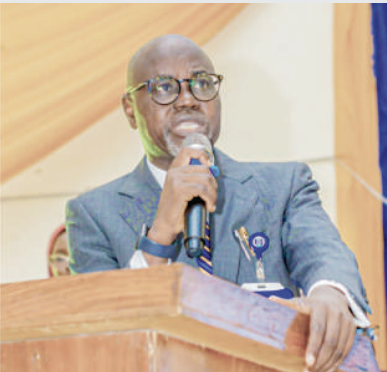
The Vice Chancellor of the University of Ilorin, Prof. Wahab Olasupo Egbewole, SAN, has called for critical policy reforms to address emerging challenges in the contemporary digital media environment, stressing the need to sanitise the digital space and enable it to effectively fulfil its societal mandate.
Prof. Egbewole made the call penultimate Wednesday (June 10, 2026) at the Lecture Theatre of the Faculty of Communication and Information Sciences (CIS) during the 1st National Conference organised by the Department of Mass Communication in collaboration with Gerin FM 95.5, Ilorin. The conference was themed “Broadcasting Policy in the Contemporary Digital Media Environment.”
The Vice Chancellor, who commended the Department for initiating the conference, described the programme as a practical demonstration of the commitment of the University to strengthening academia-industry relations. He noted that the collaboration with a media organisation reflected the University’s drive towards promoting science, technology and innovation through meaningful community engagement.
The renowned legal luminary noted that the conference theme was timely and highly relevant, as it addressed critical issues confronting the media industry in an era dominated by digital technologies. He expressed optimism that deliberations at the conference would provide valuable insights into the evolving broadcasting landscape.
Prof. Egbewole urged participants to critically examine the challenges associated with digital media operations and develop practical policy recommendations for governments and relevant stakeholders, adding that such efforts would contribute significantly to ensuring a more responsible, credible and productive digital media ecosystem.
In her welcome address, the Dean of the Faculty of Communication and Information Sciences, University of Ilorin, Prof. Saudat Salah Abdulbaqi, explained that the conference was conceived to provide an intellectual platform for scholars, media practitioners, policymakers and regulators to critically examine emerging issues in Nigeria’s broadcasting landscape.
She noted that the rapid evolution of digital technologies has continued to redefine broadcasting operations, thereby necessitating robust policy frameworks capable of addressing contemporary challenges.
Prof. Abdulbaqi disclosed that the conference would feature presentations from renowned experts in the broadcasting industry, noting that the resource persons are expected to offer valuable insights into regulatory reforms, content governance, digital migration and the future of broadcasting in Nigeria.
The Dean, who is also a Council Member of the Nigerian Institute of Public Relations (NIPR), expressed optimism that deliberations at the conference would generate practical recommendations that would contribute significantly to policy formulation and implementation in the nation’s broadcast sector.
Also speaking, the Chief Promoter of Garin FM, Dr Mahmud Abdulraheem, described the theme of the conference as highly significant in view of the rapidly evolving communication landscape. He noted that digital transformation has created enormous opportunities within the media industry while simultaneously raising concerns that require urgent regulatory attention.
Dr Abdulraheem stressed the need for stronger collaboration among media practitioners, policymakers and academic institutions in developing policies capable of addressing emerging challenges associated with digital broadcasting, misinformation and content governance in Nigeria.
Also speaking, a former Director-General of the National Broadcasting Commission (NBC), Dr Is’haq Modibo Kawu, former DG, NBC, said that technological advancement has fundamentally altered the traditional broadcasting structure across the world. He explained that regulators must continuously review broadcasting policies in order to effectively respond to changing realities in the contemporary media⁷ environment.
Dr Kawu emphasised that policy reforms remain critical to protecting professional standards, promoting ethical broadcasting practices and ensuring that media organisations remain responsive to the demands of modern audiences within an increasingly digital communication ecosystem.
He stated that the future of broadcasting depends significantly on the ability of stakeholders to design effective regulatory frameworks capable of balancing innovation with responsibility. He noted that digital media has greatly expanded access to information while creating new governance challenges.
The Executive Director, Centre for Media and Society, (CEMESO), Dr Akin Adegbulu, urged governments, regulators and industry practitioners to prioritise policies that promote accountability, credibility and ethical standards within the broadcasting sector. He stressed that responsible media practice remains central to national development and democratic growth.
Earlier, the Head of the Department of Mass Communication pf the University, Prof. Patrick Udende, urged participants to engage actively in the deliberations, stressing that meaningful dialogue and collaboration among scholars, media professionals and policymakers would contribute significantly to the growth and sustainability of the broadcasting sector.
Prof. Udende expressed optimism that the conference would generate practical recommendations capable of strengthening broadcasting practice and policy formulation in Nigeria while preparing the industry for emerging communication realities.
Also in attendance were the Deputy Vice Chancellor (Academic), Prof. Prof. Moji Taibat Bakare-Odunola; the Deputy Vice Chancellor (Research Technology and Innovation), Prof. Muhtar Adeiza Etudaiye; the Registrar, Mr Mansur Adeleke Alfanla; the Bursar, Mr Abiodun Lawal; the University Librarian, Prof. Kamaldeen Tunde Omopupa; as well as staff members and students of the Faculty, among others.
