
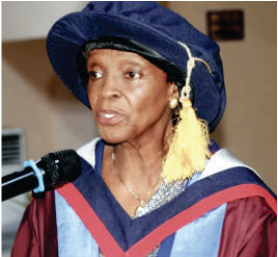
Etejere urges stakeholders to embrace inclusiveness in educational setting
By Abubakar Imam
A former Head of the Department of Educational Management, University of Ilorin, Prof. Patricia Agnes Ovigueraye Etejere, has called for the establishment of a gender-responsive educational system in Nigeria in order to facilitate proper national development.
Prof. Etejere made the call last Thursday (March 5, 2026) while delivering the 298th Inaugural Lecture of the University, titled “Two Wings, One Bird: Why Education Cannot Fly Without Gender Equality”, at the University Auditorium.
The veteran teacher said that to ensure equality among members of the two sexes, universities, colleges, and secondary schools should be seen as inclusive spaces where access, participation, achievement, and leadership opportunities are equitably distributed.
She noted that such institutions should be characterised by gender-sensitive curricula, inclusive leadership structures, and learning environments that actively challenge stereotypes rather than reinforce them.
Prof. Etejere, who is also a former Director of the Centre for Students With Special Needs (formerly known as the Centre for Supportive Services For the Deaf), said that gender-responsive policies must be clearly articulated, adequately funded, and rigorously monitored.
She explained that gender-disaggregated data should always inform educational planning, budgeting, recruitment, promotion, and leadership development, noting that the provision of facilities such as creches or daycare centres, nursing rooms, play areas or kids zones in academic institutions will go a long way to enhance the work of women in general.
Prof. Etejere specifically welcomed the pronouncement in the recent ASUU-FGN agreement that female academic staff will be allowed to go on six months maternity leave, pointing out that the policy is a right idea in the right direction.
The Inaugural Lecturer said that gender considerations should equally be integrated into curriculum design, pedagogy, teacher education, assessment, leadership training, and quality assurance processes to eliminate stereotypes and promote inclusivity. She said that accountability mechanisms must be established to assess compliance and impact.
Prof. Etejere also encouraged policymakers to prioritise targeted interventions such as scholarships for female postgraduate students, leadership development programmes for women, and ICT access initiatives that address digital gender gaps. These investments, according to her, are essential for building a robust pipeline of female academics and educational leaders.
Prof. Etejere, who attained the rank of Director in the Kwara State Teaching Service before joining the services of the University of Ilorin over two decades ago, acknowledged the roles being played by educational managers, including Principals, Departmental Heads, Deans, and Vice Chancellors, in translating policy into practice. She, therefore, encouraged them to cultivate inclusive institutional cultures that value diversity, fairness, and merit.
She also urged them to implement flexible work arrangements, equitable workload distribution, and supportive welfare policies to address “work-life” balance challenges, particularly for women in the academia.
She also encouraged institutional leaders to invest in ICT infrastructure and digital capacity building. She added that they should ensure that all staff have equal access to tools that enhance teaching, research, and global engagement.
Families and communities, according to the Inaugural Lecturer, should continue to serve as powerful influence on educational participation and career choices, saying that sustainable gender equality in education requires a cultural shift that values education and leadership for both girls and boys.
Prof. Etejere urged parents, religious leaders, traditional authorities, and community organisations to actively challenge norms that restrict female education or leadership. She said that encouraging girls academic ambition, supporting women’s career progression, and sharing domestic responsibilities are crucial steps towards creating an enabling environment for educational success.
She also pointed out that community engagement initiatives, advocacy programmes, and partnerships between schools and local stakeholders can further reinforce positive attitudes towards gender equality and educational empowerment.
Prof. Etejere also encouraged the strengthening of the capacity-building programmes to equip educators and administrators with gender-sensitive teaching and leadership skills.
The Inaugural Lecturer said that gender balance in educational leadership and governance should be encouraged and promoted to enhance inclusive decision-making.
Prof. Etejere pointed out that stakeholders should endeavour to demonstrate and sustain political will and funding commitment to advance gender equality in education.
The Inaugural Lecture, which was presided over by the Vice Chancellor, Prof. Wahab Olasupo Egbewole, SAN, who was represented by the Deputy Vice Chancellor (Academic), Prof. Moji Taibat Bakare-Odunola, was attended by Principal Officers of the University as well as colleagues, friends, relations, students and mentees of Prof. Etejere from far and near.
